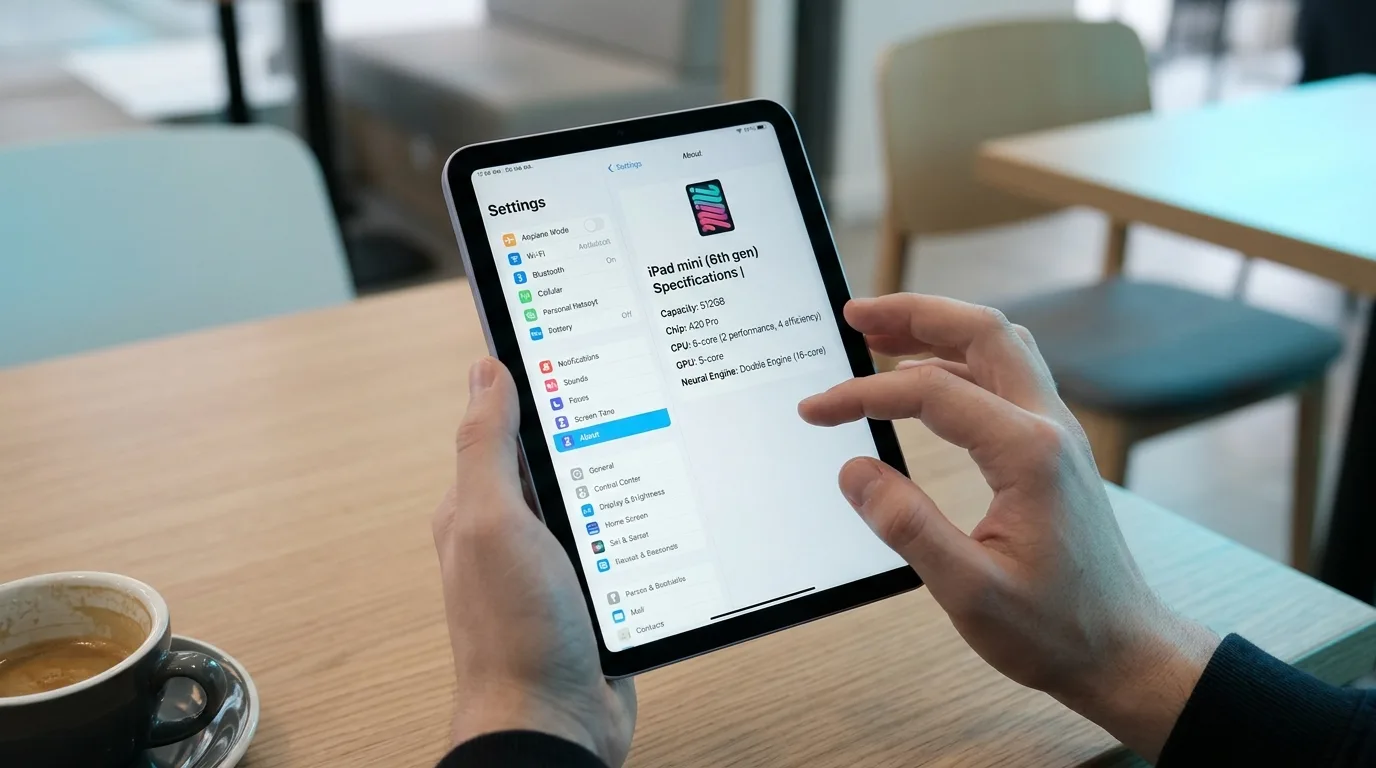
iPad mini OLED: The 512 GB model has a more powerful CPU and dual Neural Engines
The new 512GB OLED iPad mini integrates a 6-core CPU and a dual Neural Engine. Here are the differences compared to the 128 and 256 GB models.
The technical specifications of the new iPad mini OLED reveal an important hardware difference between the available configurations. The 512GB storage model uses a variant of the A20 Pro processor with a 6-core CPU and dual 16-core Neural Engine, while the 128 and 256GB versions adopt a 5-core CPU and a single 16-core Neural Engine. Not only does the space available for files change: choosing the larger capacity also results in a different chip configuration.
iPad mini OLED: the differences between the three configurations
As highlighted by MacRumors based on the technical specifications published byApple, the three versions of the tablet do not share exactly the same A20 Pro processor configuration. The main distinction concerns the number of CPU cores and the architecture of the Neural Engine.
The 512GB model has a 6-core CPU, consisting of two super cores and four high-efficiency cores. The 128GB and 256GB configurations instead use a 5-core CPU, with two super cores and three high-efficiency cores. The higher-capacity model therefore offers an additional high-efficiency core, while the number of super cores remains unchanged.
This difference is relevant for those who are comparing device variants: the choice of storage capacity also leads to a difference in processor specifications. The source, however, does not report benchmarks or measurements that allow quantifying the performance advantage of the 512 GB version in real applications.
A20 Pro, GPU and Neural Engine: what changes
The second difference concerns the Neural Engine, the component dedicated to neural processing. On the 512GB modelAppleuses a Dual 16-core Neural Engine, while on the 128 GB and 256 GB versions there is a 16-core Neural Engine. This is therefore a further hardware distinction that accompanies the configuration of the CPU.
Also in this case it is important to separate the declared characteristics from the actually demonstrated performances. The available information identifies the different configuration of the components, but does not include test results that would allow us to determine how much the dual Neural Engine affects daily operations or neural processing loads.
The GPU, however, has no declared differences between the three storage capacities. All models integrate a 7-core GPU, Neural Accelerators and support for hardware-accelerated ray tracing. Those who choose the 512 GB configuration therefore do not get, based on the reported specifications, a greater number of graphics cores than the other two versions.
The specifications table thus shows a precise distinction: CPU and Neural Engine change in the 512 GB version, while the GPU configuration and graphics technologies indicated remain common to the entire range.
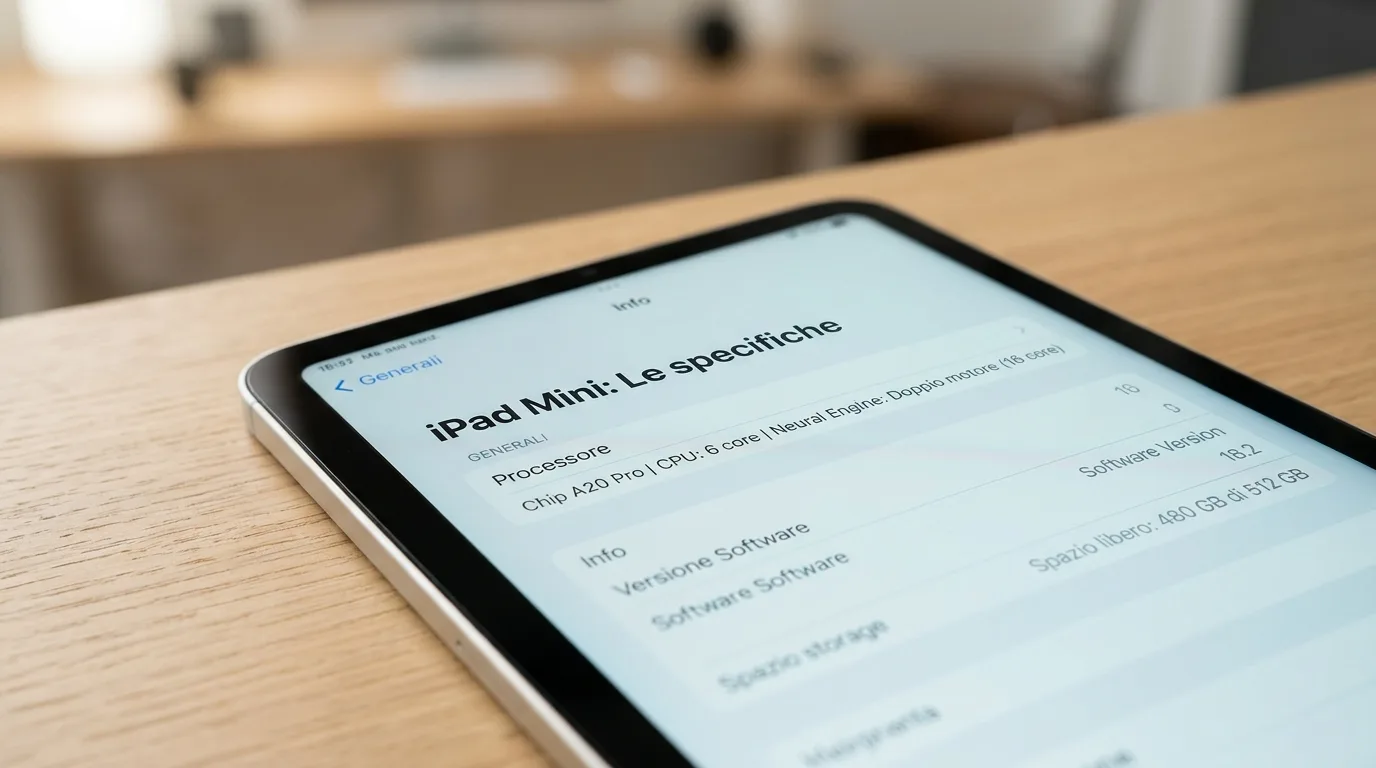
Nano-texture glass and starting prices
The differences between the configurations aren't limited to the processor. Apple reserves the nano-texture glass display option for models with 256GB and 512GB of storage. The 128 GB variant is therefore not among those for which this option is indicated as available.
It's a distinction to be considered separately from the characteristics of the chip. The 256 GB version, although sharing the CPU and Neural Engine with the 128 GB one, is among the models that can be configured with nano-texture glass. The 512 GB configuration instead combines this possibility with the variant of the A20 Pro equipped with a 6-core CPU and double Neural Engine.
As for the price list, MacRumors reports a starting price of $699 for the Wi-Fi model and $849 for the Wi-Fi + Cellular one. The source does not specify in this passage the prices of the individual storage capacities nor the additional cost of the nano-texture option. It is therefore not possible to reconstruct a complete economic comparison between the three configurations using only these data.
However, the specifications allow you to clearly identify the hardware differences to be evaluated before purchasing: the 512 GB model is the only one, among those described, to have the 6-core CPU and the Dual 16-core Neural Engine; the 256 GB one maintains the processor configuration of the basic version, but adds the possibility of choosing nano-texture glass.
Editorial source consulted:MacRumors.


Commenti
Ancora nessun commento. Sii il primo a partecipare.