
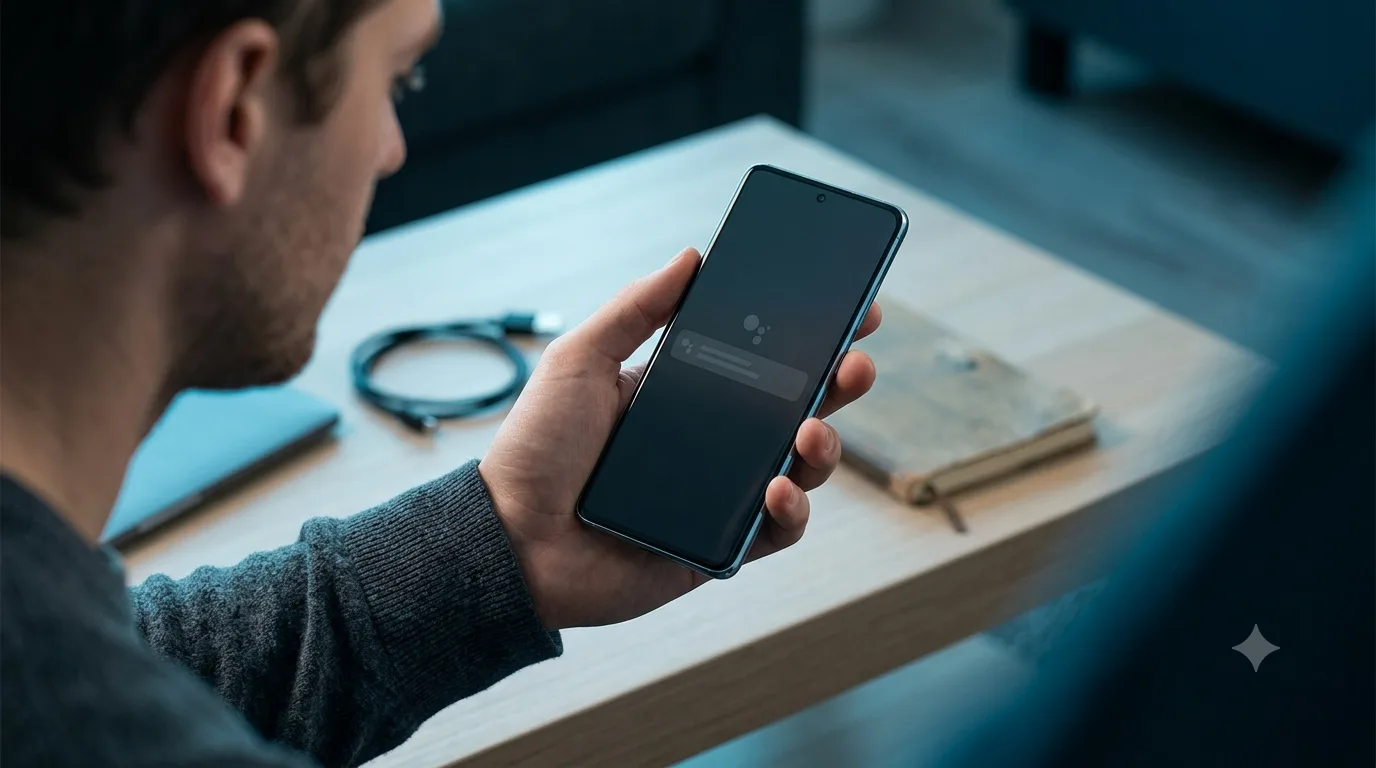
Google Assistant says goodbye to Android phones: here's when and why
Google has announced the date when Google Assistant will stop working on Android phones. Find out when the change will happen and what it entails
googlehas finally revealed the precise dates when its voice assistant, Google Assistant, will start disappearing from Android phones. This move marks a significant shift in Google's mobile ecosystem, with the company shifting its focus towards new AI-powered solutions. Thereend of Google Assistant Androidis scheduled for early August 2026, an announcement that took many by surprise and will have a direct impact on millions of users accustomed to interacting with their device via voice commands.
Google's decision to retire Assistant isn't entirely unexpected, considering the company's growing investment in Gemini, its most advanced AI model. However, clarity on timing provides users and developers with a defined time horizon to adapt to this transition.
The end of Google Assistant Android: the official dates
As revealed by Google, the process of deactivating Google Assistant on Android phones will officially begin at the beginning of August 2026. This means that, starting from that date, users may notice a progressive reduction in functionality or the complete absence of the traditional voice assistant on their devices. The transition will not happen overnight for everyone, but will be a gradual rollout affecting different models and regions.
This timing is crucial to understanding how Google intends to manage the transition to its new AI paradigm. The company aims to steer users towards Gemini, which is already available in some forms and which promises more advanced capabilities and tighter integration with Google services.
Important Update for Google Assistant
- Start of Rollout:Google Assistant will begin disappearing from Android phones starting in early August 2026.
- Transition:Users will gradually be directed towards alternatives based on Gemini, Google's new AI model.
- Impact:Features related to the traditional voice assistant will be removed or replaced.
What this means for Android users
For millions of Android users, saying goodbye to Google Assistant will mean a significant change in daily habits. The assistant has for years been a point of reference for sending messages, managing appointments, controlling home automation and searching for information via voice commands. Its absence will require adaptation and, in many cases, the exploration of new ways of interacting with your smartphone.
As Google pushes Gemini as a successor, it's not yet clear whether all of Assistant's features will be replicated or whether there will be initial gaps. Users will have to familiarize themselves with a new interface and a new set of commands, which may differ from what they are used to.
Impact on daily functionality
The impact will be felt in several areas: from voice control of smart home devices, to navigation, to the management of personalized routines. Many third-party apps and services that integrated with Google Assistant may need updates to support Google's new AI platforms, or they may lose some of their more convenient features.
The future of Google voice assistants
Google Assistant Android end - The decision to put an end to Google Assistant Android fineit's a clear sign of the direction Google is taking: a future dominated by generative artificial intelligence. Gemini is at the heart of this strategy, designed to be a more powerful, contextual and versatile assistant, capable of understanding and generating complex responses.
Google is positioning Gemini not just as a voice assistant, but as a true AI co-pilot integrated across the entire Google ecosystem, from phones to cloud services. The goal is to offer a more fluid and intelligent user experience that goes beyond simple voice commands to embrace reasoning and creativity.
Gemini as successor
Gemini is already being integrated into several Google products, and its expansion to Android phones is the next step. Users can expect an assistant that not only answers questions, but can also help write texts, summarize documents, generate ideas, and interact in more natural, conversational ways. This transition, although it may create some initial discomfort, promises to bring a higher level of artificial intelligence directly into the hands of users.
Learn morehere


Commenti
Ancora nessun commento. Sii il primo a partecipare.