
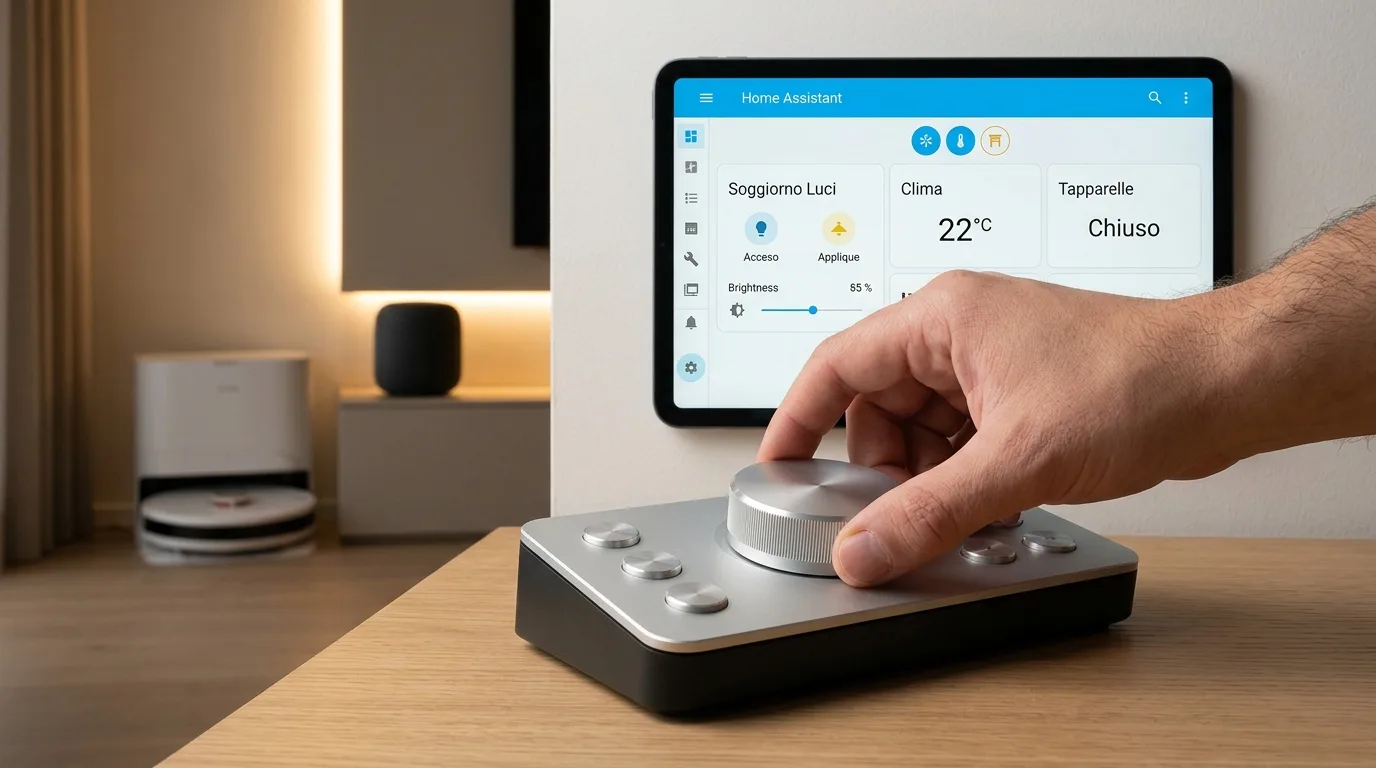
Smart Home: the analogue charm of knobs and buttons wins over apps
Find out why more and more home automation enthusiasts prefer physical interfaces like knobs and buttons to control their smart home, too
In the increasingly digital panorama of home automation, a countertrend is emerging: the return to physical control for one's smarthome. Far from the coldness of touch screens and digital interfaces, many users rediscover the pleasure and practicality of analogue knobs, buttons and switches to manage lights, temperature and other devices. This preference for a more tangible approach to smart home control, even when using advanced platforms like Home Assistant, demonstrates how technology can evolve by embracing solutions that combine innovation and a pinch of nostalgia.
The smart home is controlled from the console: the charm of knobs and buttons versus apps. Despite the proliferation of digital interfaces, many users still prefer physical control for managing smart home devices. This trend, which sees the return of knobs and buttons, integrates perfectly with advanced platforms such as Home Assistant, offering a more immediate and satisfying user experience.
The return of physical control in home automation
The age of smartphones and apps has revolutionized the way we interact with technology, and home automation is no exception. However, for many, the convenience of an app dedicated to controlling every aspect of the smart home isn't enough to replace the tactile gratification of a physical switch or the precision of a knob. These analog solutions offer immediate feedback and a more direct feeling of control, which digital interfaces often fail to replicate.
Smart home console: a charm that goes beyond functionality
The concept of "smart home consoles" refers to physical, often customizable, devices that serve as control hubs for home automation systems. These can range from simple programmable buttons to more complex panels with rotary knobs or sliders. Their charm lies not only in functionality, but also in aesthetics and the ability to integrate harmoniously into furnishings, transforming a technological element into a design piece.
Compatibility with Home Assistant
One of the main reasons for the success of these analog solutions is their increasing compatibility with open-source platforms such as Home Assistant. This flexible ecosystem allows users to integrate a wide range of hardware devices, including those with physical interfaces, creating highly customized home automation systems. The ability to map specific actions to knobs or buttons, managing everything through Home Assistant, offers an unprecedented level of control.
Why prefer knobs and buttons to apps
The reasons behind this preference are multiple. First, immediacy: turning a knob to adjust the brightness or pressing a button to turn on a light is an instant action, which doesn't require you to unlock your phone, find the right app and navigate through menus. Second, reliability: physical systems tend to be less susceptible to network connectivity issues or software crashes than apps. Finally, there is a psychological aspect: physical contact with a device can create a stronger bond and a greater perception of control. For home automation enthusiasts, creating your own personalized "smart home console", perhaps with the help of Home Assistant, becomes a rewarding project that combines technology and creativity.


Commenti
Ancora nessun commento. Sii il primo a partecipare.