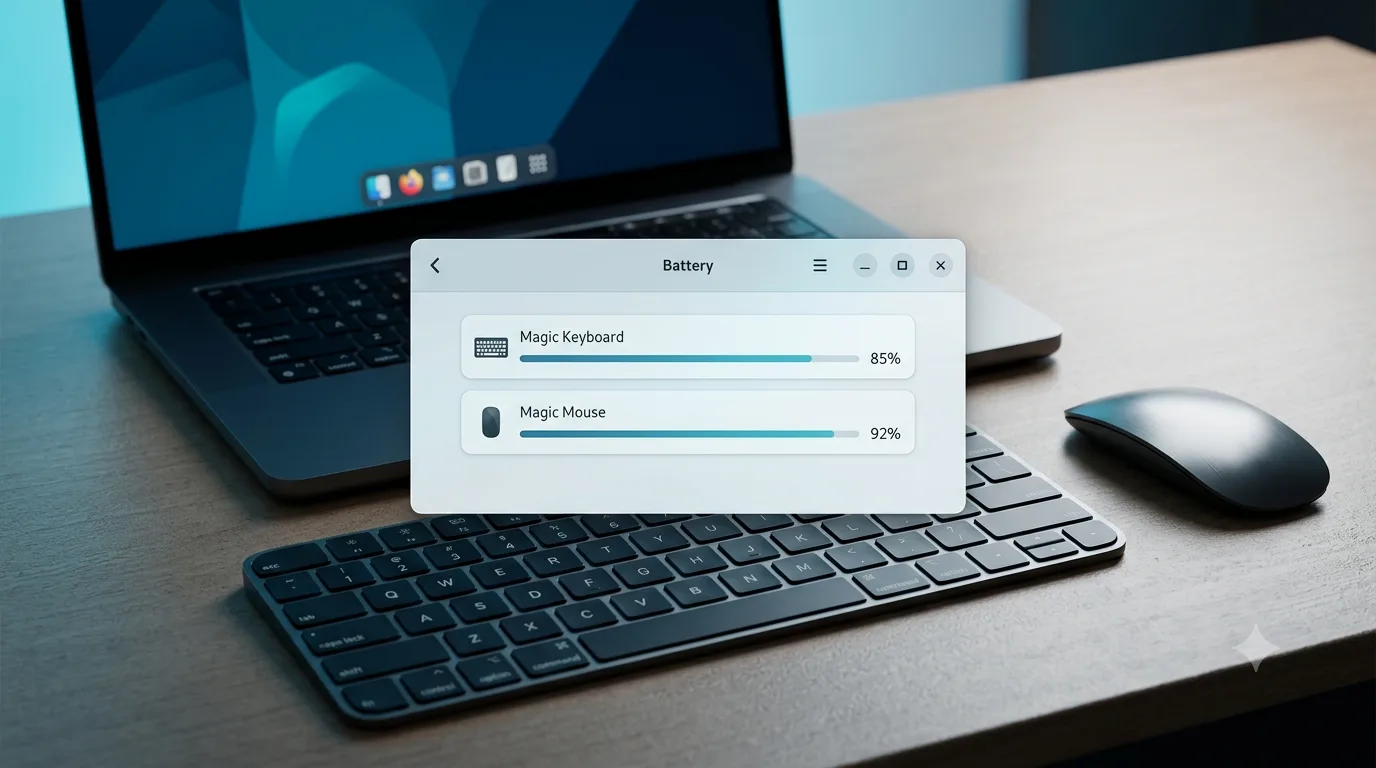
Linux Finally Enables Battery Monitoring for Apple Magic Keyboard and Mouse via Bluetooth
Finally, owners of Apple Magic Keyboard and Mouse on Linux will be able to monitor the battery level via Bluetooth. Find out the details of this
Owners of Apple peripherals on systemslinuxhave long wanted a basic but crucial feature: battery health monitoring. Finally, thanks to a series of new patches integrated into the Linux kernel, theApple Magic Keyboard battery monitorand Magic Mouse via Bluetooth is now a reality. This update addresses a historical gap, significantly improving the user experience for those who combine Apple hardware with the open source operating system.
Linux and Apple Magic Keyboard battery monitoring
For years, Linux users who used the Apple Magic Keyboard or Magic Mouse via Bluetooth connection found themselves without the ability to check the battery charge level directly from the operating system. This lack forced us to resort to alternative solutions or, more often, to replace the batteries only when they ran out completely. Recent changes to the Linux kernel, particularly those related to the HID (Human Interface Device) driver, introduce native support forApple Magic Keyboard battery monitorand Magic Mouse, aligning the user experience with that offered on macOS.
Technical Details of Bluetooth Implementation
The patches in question focus on the interaction between the Linux kernel and Apple's Bluetooth devices. By leveraging standard HID over Bluetooth protocols, developers were able to decipher and implement the logic needed to read battery status data. This was no easy task, given the often proprietary nature of Apple's hardware implementations. The update ensures that the operating system can correctly interrogate peripherals and display a reliable charge percentage, a fundamental step forward for everyday usability.
Compatibility and System Requirements
Although the patches have been recently integrated, full availability to users will depend on the version of the Linux kernel being used. Typically, these features are included in new kernel releases, such as Linux 7.2 or later. Users will need to ensure they have an updated kernel to benefit from battery monitoring. There are no additional hardware requirements beyond the presence of a working Bluetooth module.
The Impact on Users of Apple Peripherals on Linux
The introduction of battery monitoring represents a significant improvement in the quality of life for users. You will no longer have to guess when the batteries in your Magic Keyboard or Magic Mouse are running low, avoiding sudden interruptions to your work or free time. This feature, while seemingly minor, helps make Linux an even more robust and welcoming platform for those who want to use hardware from different manufacturers, including those from Apple.
Crucial Update for Linux Users
New Linux kernel patches bring battery monitoring for Apple Magic Keyboard and Magic Mouse via Bluetooth. A significant step forward for Apple hardware integration on open source operating systems, improving the user experience and charging predictability.
The Context of Apple Hardware Support on Linux
This development is part of a broader effort by the open source community to improve support for Apple hardware on Linux. At the same time, significant progress is also being made for the latest Apple Silicon SoCs, as demonstrated by basic support for the M3 Pro, Max and Ultra chips in the Linux 7.2 kernel. While graphics acceleration and other advanced features are still in development, ongoing community efforts demonstrate a clear direction toward greater compatibility and functionality for Apple devices within the Linux ecosystem. TheApple Magic Keyboard battery monitorit is just the latest example of this positive trend.
In summary, the integration of battery monitoring for the Apple Magic Keyboard and Magic Mouse peripherals on Linux is excellent news. It demonstrates the vitality and adaptability of the Linux community in providing practical solutions and improving the user experience, even with hardware that is not natively designed for this operating system. This advancement, combined with other efforts to support Apple Silicon chips, heralds an increasingly integrated future for users who choose the flexibility of Linux.
Source:phoronix


Commenti
Ancora nessun commento. Sii il primo a partecipare.