InfoHub: The new integration for Home Assistant that revolutionizes touch information panels
Discover InfoHub, the new integration for Home Assistant that allows you to create personalized touch information panels via drag-and-drop, without
InfoHub: The new integration forhomeAssistant that revolutionizes touch information panels
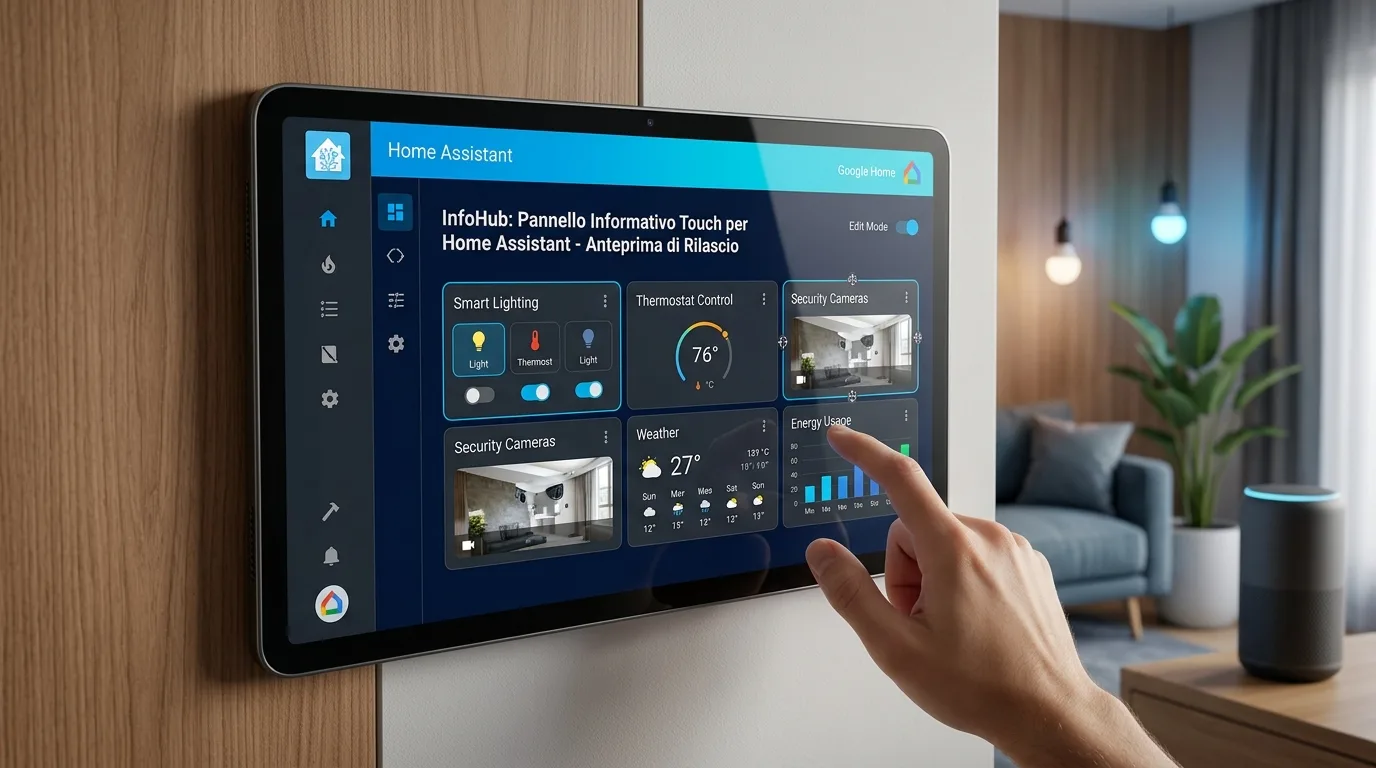
InfoHub Home Assistant is at the center of the news: In the world of home automation, customization and device integration are fundamental. For those who use Home Assistant and want to create an efficient and personalized touch information panel, InfoHub has arrived. This new integration promises to simplify the creation of information displays, eliminating the need for kiosk-mode browsers or complex code deployments. InfoHub presents itself as a lightweight and native solution, with a layout that can be configured directly from the Home Assistant interface.
Project Update
InfoHub is a project under development (v0.1) but already actively used by its creator. It is currently available as a custom repository via HACS (Home Assistant Community Store), allowing users to easily integrate it into their systems.
What is InfoHub and how it works
InfoHub Home Assistant - InfoHub is an integration for Home Assistant which, combined with a dedicated display client, allows you to manage touch information panels in an intuitive way. The main goal is to offer a seamless user experience, where configuring the display layout happens visually, via a drag-and-drop system within Home Assistant itself. This approach avoids the need to redeploy code every time you want to change what is displayed on the screen.
The main features of InfoHub
Custom configuration and panels
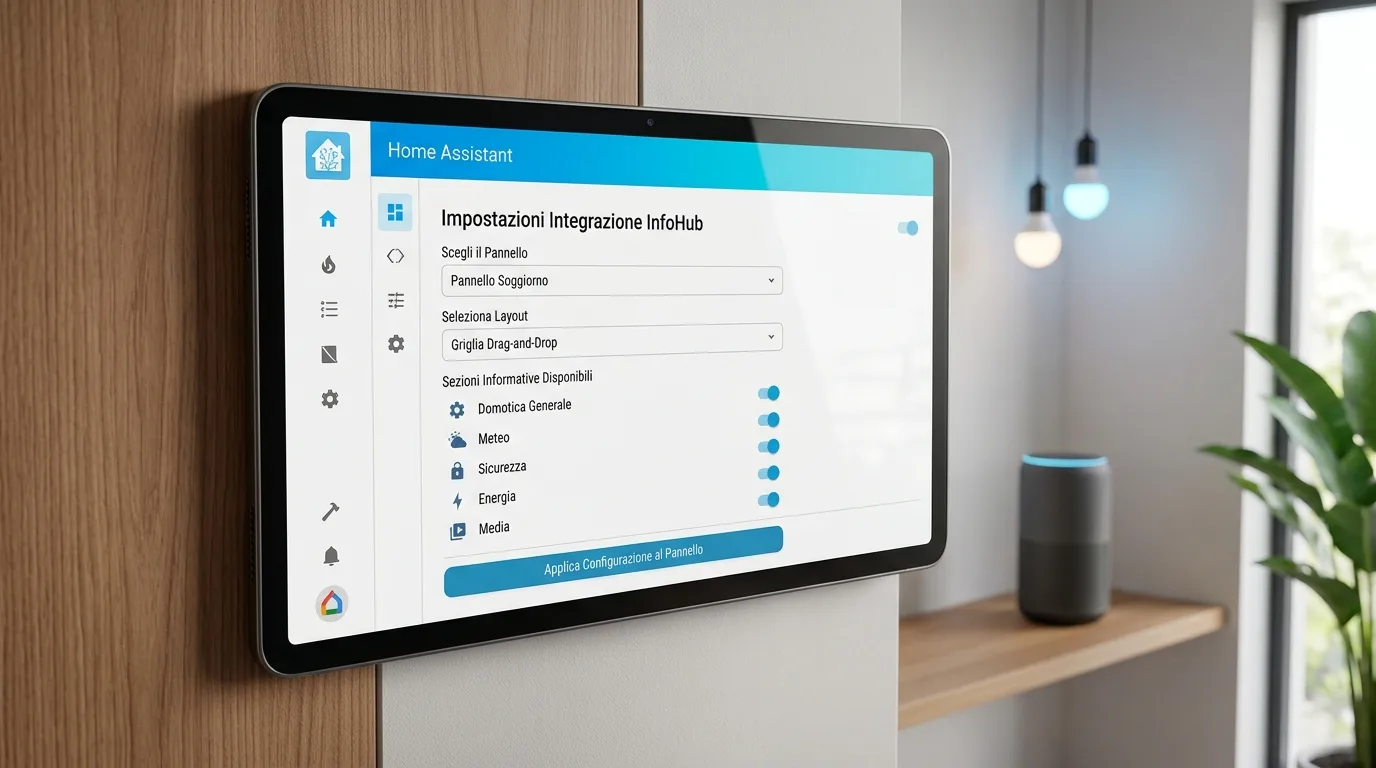
The integration introduces a configuration section in the Home Assistant sidebar, similar to those of Energy or Calendar. Here you can create named panels, each representing a complete visually configurable layout. The drag-and-drop system allows you to position and size various elements on the screen with ease.
Real-time updates
InfoHub uses a lightweight WebSocket protocol to send real-time updates. Unlike traditional polling, the integration directly reads states from Home Assistant and broadcasts them to connected displays. It also supports integration with Google Calendar and external APIs such as GTS (for specific data such as degree days) via a timer system.
Widgets available
The system offers a variety of predefined widgets to display useful information, including: clock (with customizable formats), animated weather (with day/night representation and weather conditions), power indicator, internal climate data, waste collection information and monthly calendar view. Each widget has specific options for customization.
Multi-display and multi-language support
InfoHub is designed to manage multiple physical displays. Each display is identified by a unique ID and can be assigned to a specific panel chosen from a drop-down menu. This allows you to have a single shared data flow, but customized layouts for each device. The integration also supports German (DE) and English (EN) viewing, both in the admin interface and on the display itself, with the ability to set the language for each panel.
The display client: MicroPython and LVGL
The display client was developed to run on a Raspberry Pi Zero 2W with a 10-inch HDMI touch display. It uses LVGL (Light and Versatile Graphics Library) via a Linux-hosted MicroPython port, taking advantage of framebuffer and touch input (evdev), without the need for X11 or a browser. The communication protocol is based on JSON sent via WebSocket, making the client potentially adaptable to other platforms, such as ESP32, although there is currently no hardware to test such configurations.
Differences with existing solutions
Compared to other solutions like openHASP (based on MQTT and YAML files) or ESPHomeDesigner (which requires compilation and flash), InfoHub stands out for its direct integration with the native Home Assistant interface and visual drag-and-drop configuration. It requires no MQTT broker or flashing procedures to change the layout, greatly simplifying the customization process.
Installation and current status
InfoHub is currently in version 0.1 and can be added via HACS by selecting "Custom repositories" and entering the GitHub repository URL. The creator invites users to provide feedback, report bugs and suggest compatibility with other displays, showing willingness to answer questions about the project's architecture. InfoHub represents a significant step forward for those looking for a flexible and powerful solution for their smart home information panels.
They talk about ithere


Commenti
Ancora nessun commento. Sii il primo a partecipare.