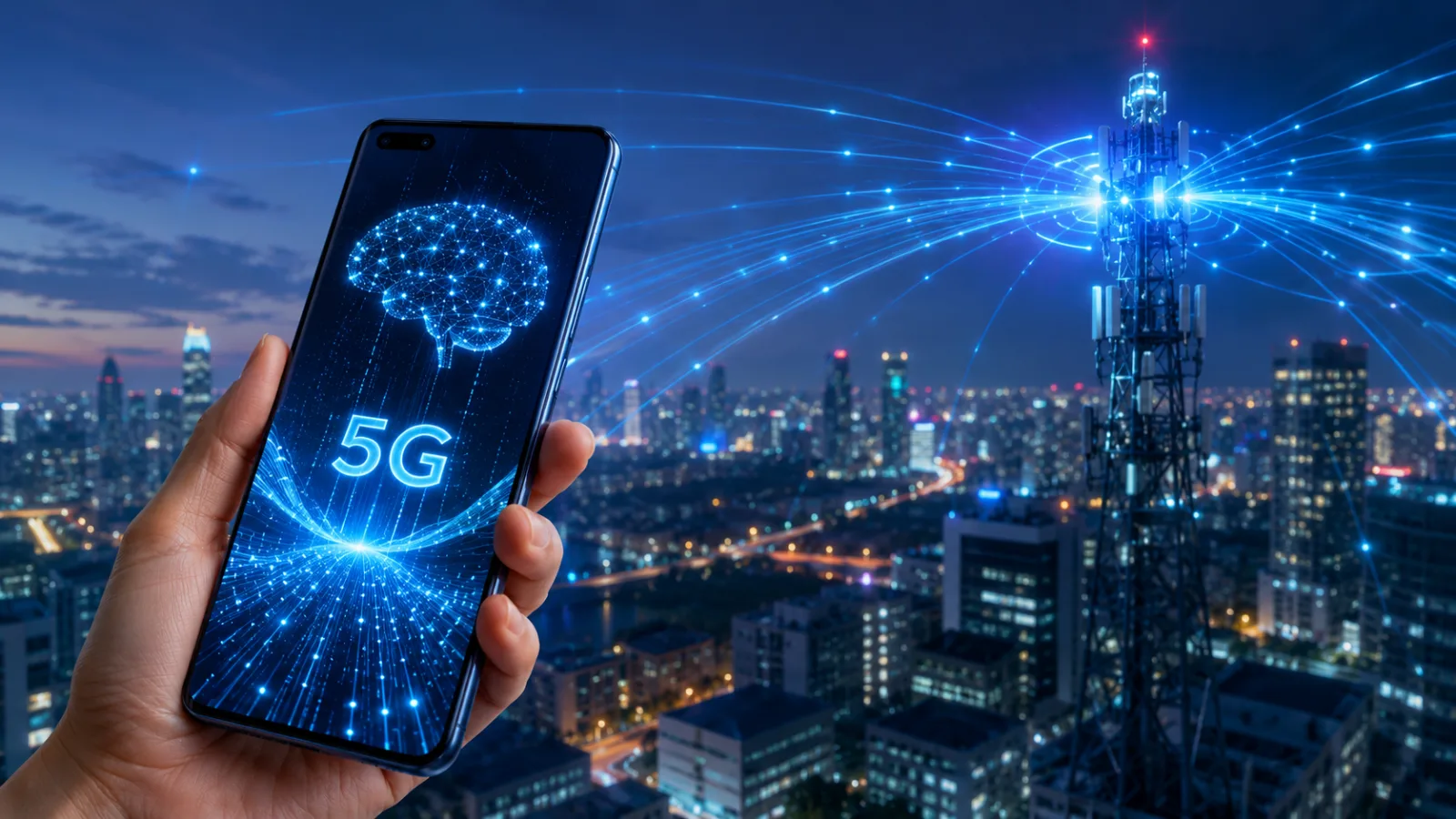
Huawei GigaUplink: 5G evolves for mobile Artificial Intelligence
Huawei presents GigaUplink, an innovative 5G solution to enhance Artificial Intelligence on mobile devices. Find out how it will change
Huawei recently unveiled GigaUplink, a significant new solution that promises to revolutionize the way 5G mobile networks support artificial intelligence (AI) services on our smartphones. The announcement, which took place at MWC Shanghai, underlines the company's commitment to enhancing the uplink capabilities of 5G, making it better suited to the growing needs of mobile AI. This innovation aims to overcome current network limitations, ensuring greater efficiency and superior performance for AI applications that require high upload bandwidth.
The heart of technologyHuawei GigaUplink 5Glies in its ability to drastically improve uplink data transmission speed. Traditionally, mobile networks have been optimized for downlinking, or downloading data, but with the advancement of AI and collaborative applications, uploading has become equally crucial. GigaUplink leverages advanced technologies such as carrier aggregation and Massive MIMO to ensure that mobile devices can send large amounts of data to cloud servers or other devices with minimal latency and high speeds. This is critical for scenarios such as cloud rendering, interactive augmented (AR) and virtual (VR) reality, and distributed AI computing.
What is Huawei GigaUplink 5G and its importance
The solutionHuawei GigaUplink 5Git is not just a simple update, but a real infrastructural evolution. Designed to address the challenges posed by generative AI and applications that require real-time interaction with the cloud, GigaUplink aims to unlock the full potential of 5G. The goal is to provide ultra-reliable, low-latency connectivity that is essential for the smooth execution of complex AI algorithms directly on mobile devices or through edge computing. This results in richer and more responsive user experiences, where AI can operate without perceptible interruptions or delays.
The impact on Mobile Artificial Intelligence
The introduction of GigaUplink will have a profound impact on mobile Artificial Intelligence. Applications that today struggle due to upload bandwidth limitations, such as real-time AI content creation, advanced simultaneous translation or cloud games with complex graphics, will benefit greatly. The ability to quickly send data to the cloud for AI processing and receive near-instantaneous responses will open up new frontiers for developers and innovation. This will allow smartphones to become true hubs for AI, not only consuming but also actively generating intelligent content and interactions.
Benefits for users and developers
For users, the benefits will translate into a smoother and more powerful mobile experience. Imagine smarter voice assistants, cameras that processImagesand video with real-time AI without slowdowns, or augmented reality applications that dynamically adapt to the surrounding environment. Developers, on the other hand, will have a more robust network platform at their disposal, allowing them to create more sophisticated and innovative AI applications, overcoming current technical barriers and pushing the limits of what is possible with AI on mobile devices.
Key Updates on Huawei GigaUplink
- Announcement:Presented at MWC Shanghai.
- Objective:Optimizing 5G for mobile AI services.
- Technologies:Carrier aggregation and Massive MIMO to improve the uplink.
- Benefits:Low latency, fast upload speeds, support for generative AI and AR/VR.
- Implications:New possibilities for developers and an enhanced mobile user experience.
Future prospects for 5G and AI
Huawei's vision with GigaUplink is clear: prepare 5G networks for a future in which Artificial Intelligence is ubiquitous and increasingly integrated into our daily lives. This not only affects smartphones, but also other connected devices and the Internet of Things (IoT). A 5G powered byHuawei GigaUplink 5Git will be the backbone for distributed AI ecosystems, where processing can take place both in the cloud and at the edge of the network, ensuring flexibility and optimal performance. Huawei's move highlights a broader trend in the telecommunications industry that sees AI as the next big driver of growth and innovation, requiring increasingly capable and intelligent network infrastructures.


Commenti
Ancora nessun commento. Sii il primo a partecipare.