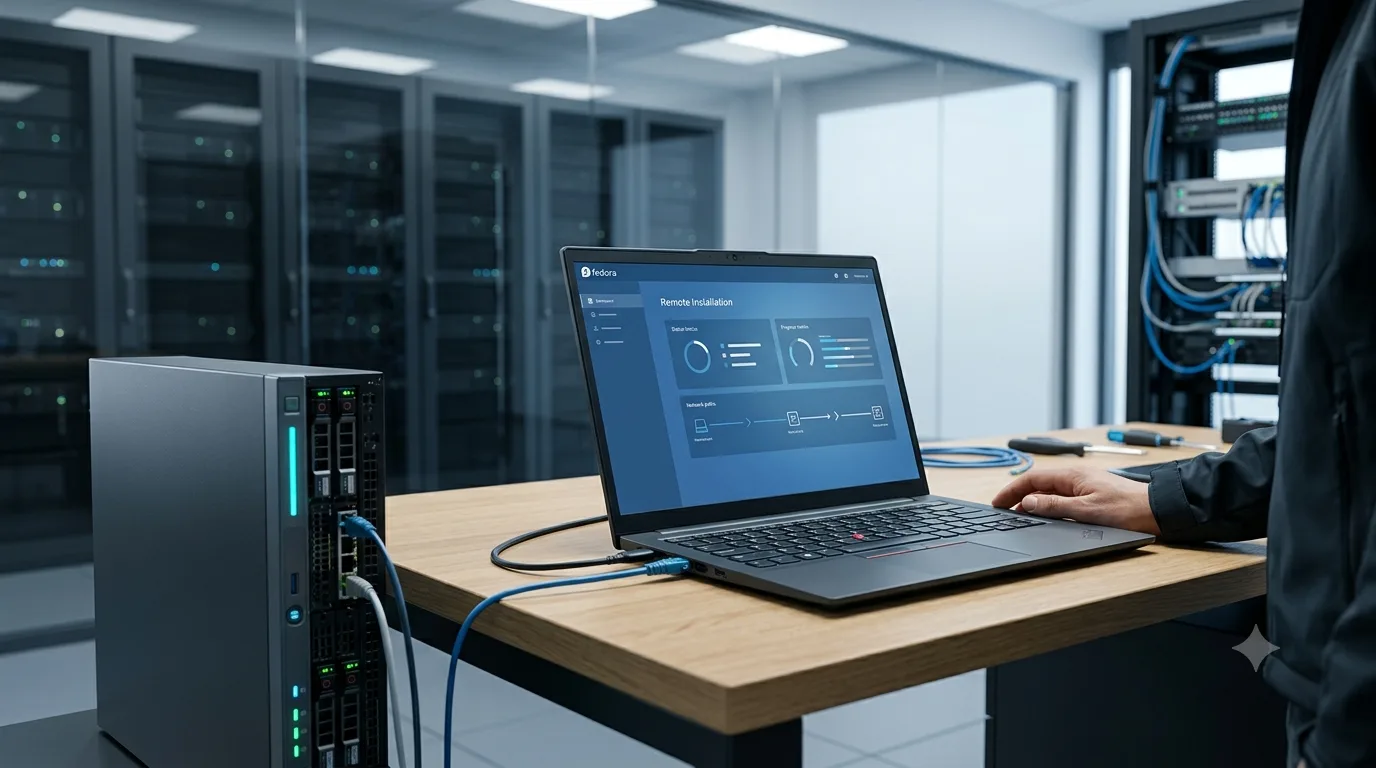
Fedora 45 Atomic Desktops: Remote web installations coming soon
Fedora 45 introduces remote web installations for Atomic Desktop images. A novelty that simplifies systems management.
Fedora Linux 45 is preparing to introduce a significant feature for its Atomic Desktop variants: support for remote web-based installations. This proposal, which recently emerged, aims to significantly simplify the deployment and management process of these operating systems, making them more accessible even for advanced or distributed use scenarios. The possibility of making aFedora Atomic Desktop remote installationvia web represents an important step forward for the Fedora ecosystem, opening new perspectives for system administrators and users who need flexibility and control.
News coming for Fedora 45
Fedora 45 Atomic Desktops is preparing to receive a major update that will allow remote installations via the web interface. This feature, still in the proposal phase, promises to revolutionize the way these systems are deployed and managed, offering greater efficiency and convenience.
Fedora Atomic Desktop: what they are and why they matter
Fedora Atomic Desktop images are a variant of Fedora designed to be immutable and atomic. This means that the base operating system is distributed as a single, immutable image. Updates are applied as atomic transactions, ensuring that the system is always in a consistent state and can be easily returned toversionprevious in case of problems. This approach is particularly useful for environments that require stability, security, and ease of recovery, such as servers, development workstations, or embedded systems.
Remote installation via web: new for Fedora Atomic Desktop
Currently, installing Fedora Atomic Desktop requires more traditional procedures, often via bootable images or other methods that can be complex in large-scale or remote deployment scenarios. The proposal for Fedora 45 aims to change this paradigm. The idea is to make Atomic Desktop images available for remote installation via a web interface. This would mean that once a minimal system is booted or an access point is configured, the user or administrator could access a web page to select and start the installation of the desired operating system, without the need for direct physical intervention or local installation media.
How the new installation system will work
While the technical details are still being worked out, the general concept is that the target system can boot a small pre-installation environment that exposes a web interface. Through this interface, the user will be able to choose which Atomic Desktop image to install and configure basic settings. The actual installation process would then be handled remotely by the distribution server or a dedicated service. This approach is partly reminiscent of the installation methods of some cloud or server systems, adapted for a desktop environment.
The advantages of the new functionality
The introduction ofFedora Atomic Desktop remote installationvia the web would bring numerous benefits. First, it would greatly simplify the work of system administrators who have to manage fleets of computers, allowing them to set up new machines or reinstall existing systems remotely quickly and efficiently. Furthermore, it would make Fedora Atomic Desktop an even more attractive choice for those who want a robust, secure and easy-to-maintain operating system, especially in professional contexts or for users who value immutability and reliability. The ability to perform a remote Fedora Atomic Desktop installation is a step forward that solidifies Fedora's position as a cutting-edge distribution.
Source:phoronix


Commenti
Ancora nessun commento. Sii il primo a partecipare.