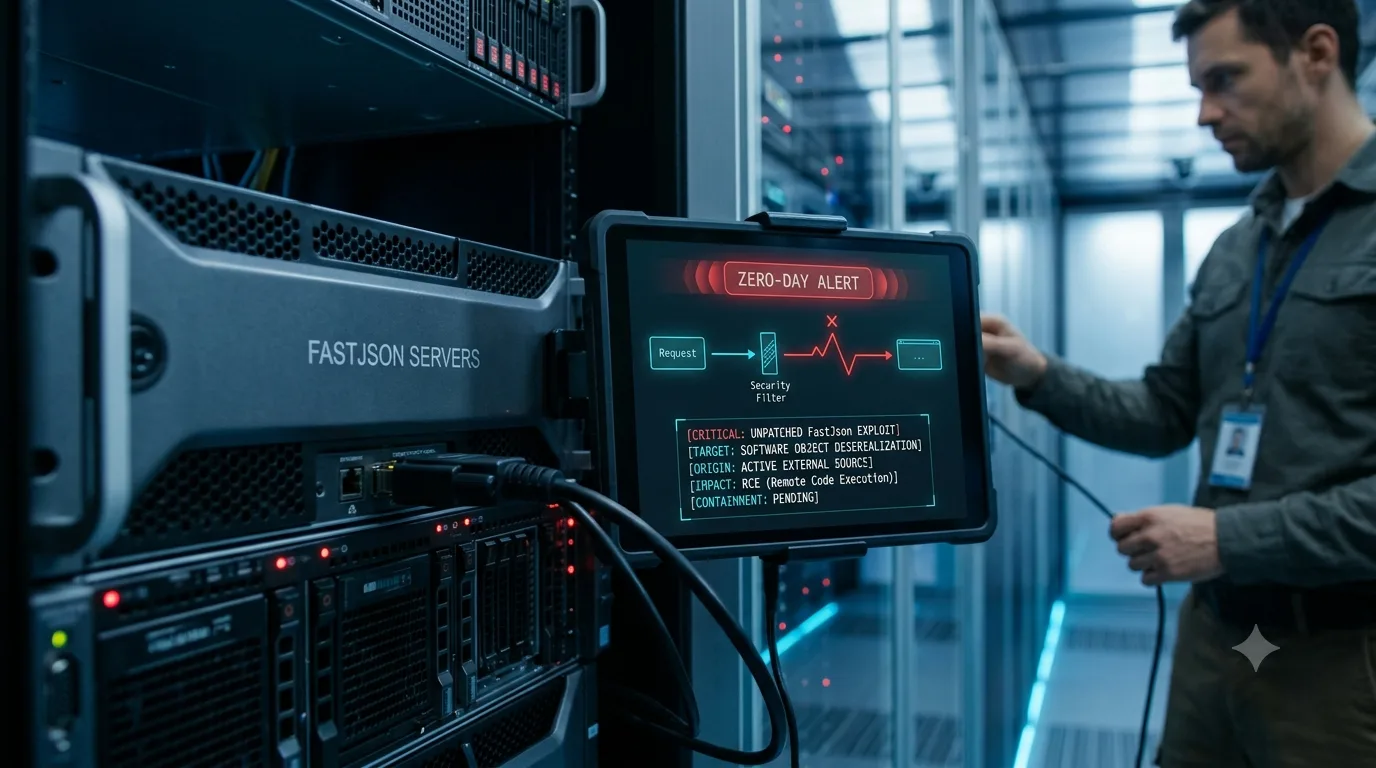
Hacker attack exploits zero-day vulnerability in FastJson: US companies targeted
Hackers are actively exploiting a zero-day vulnerability in the FastJson Java library, targeting US companies with attacks
What is FastJson and the zero-day vulnerability
In the cybersecurity landscape, a new threat is emerging with worrying speed. Hackers are actively exploiting aFastJson zero-day vulnerability, a previously unknown and not yet fixed security flaw in the popular open-source Java library FastJson. This vulnerability allows remote code execution (RCE) without requiring any user interaction or elevated privileges, making it particularly dangerous. FastJson is widely used in numerous Java applications for serialization and deserialization of JSON data, which means that a large number of companies, particularly in the United States, could be exposed to this risk.
Attention:The FastJson RCE zero-day vulnerability poses a critical risk to Java applications. It is critical that developers and system administrators apply patches as they become available and implement additional security measures to protect their systems from potential attacks.
How the attack works
The vulnerability exploits how FastJson handles deserialization of malicious data. When an application uses FastJson to process JSON input provided by untrusted sources, an attacker can send specially crafted data that, when deserialized, leads to arbitrary code execution on the server. This type of RCE attack is extremely powerful because it allows attackers to take control of the compromised system, steal sensitive data, installmalwareor use it as a starting point for further attacks within the company network. The "zero-day" nature of the flaw means that specific detection signatures for traditional security systems do not yet exist, increasing the effectiveness of the exploit.

Impact on companies and protection measures
The potential impact of thisFastJson zero-day vulnerabilityit is significant. Companies using Java-based applications that integrate the FastJson library are at risk. The speed with which hackers are exploiting this flaw, as reported byBleepingComputer, suggests that a large-scale attack campaign may already be underway. Companies should immediately check whether their applications use the FastJson library and which version. If you are using a vulnerable version, it is imperative to act promptly.
Mitigation recommendations
The first and most important measure is to upgrade to a safe version of FastJson as soon as an official patch is available. Meanwhile, system administrators can implement security measures at the network and application levels. These include filtering JSON inputs to block suspicious patterns, using Web Application Firewalls (WAFs) configured to detect RCE exploit attempts, and network segmentation to limit the propagation of any compromises. Closely monitoring system logs for anomalous activity is crucial to quickly identifying and responding to a possible attack. Awareness and readiness to take countermeasures are key to defending against threats like thisFastJson zero-day vulnerability.
Update:It is strongly recommended to monitor official FastJson channels and security communications for upcoming releases of patches and updates related to this vulnerability.


Commenti
Ancora nessun commento. Sii il primo a partecipare.