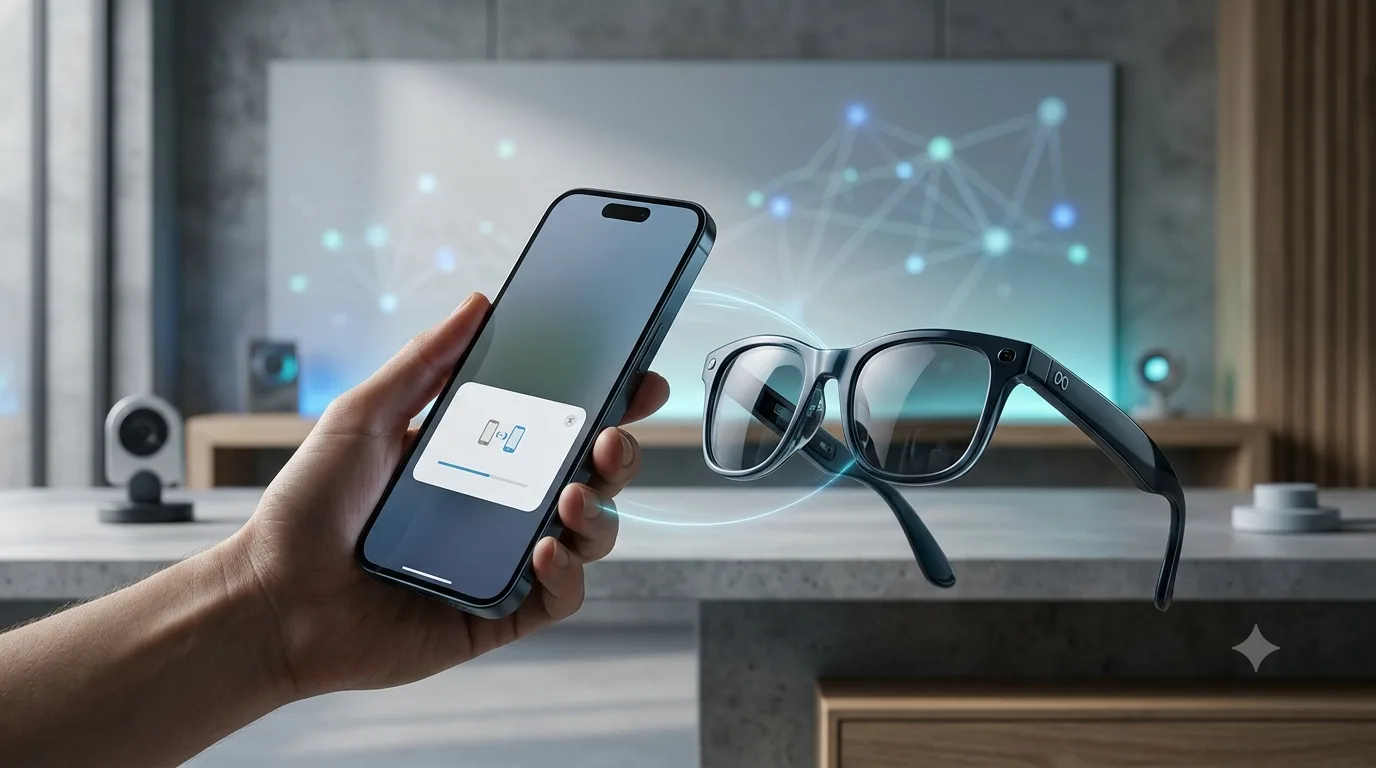
Apple extends automatic pairing to Meta glasses and Quest headsets
Apple is developing an API to extend AirPods-style automatic pairing to Meta devices, such as Quest glasses and headsets. Find out the details.
Apple has announced a significant initiative that aims to improve interoperability between its devices and third-party accessories, particularly those manufactured byhalf. The Cupertino giant has in fact revealed its intention to extend theautomatic Apple Meta pairingand other third-party accessories, such as Ray-Ban Meta glasses and Quest headsets, similar to what already happens with AirPods and Apple Watch. This move responds to a specific request made by Meta under the European Union's Digital Markets Act (DMA), marking a potential change in how non-Apple devices interact with the iOS ecosystem.
What does Apple Meta automatic pairing mean
Currently, when a user pairs an Apple accessory, such as AirPods, with an iPhone, it automatically becomes available on all other Apple devices linked to the same Apple ID, without requiring any additional steps. This fluidity has always been a strength of the Apple ecosystem. The extension ofautomatic Apple Meta pairingmeaning that once Ray-Ban Meta glasses or a Quest headset are paired with an iPhone or iPad, these accessories will be immediately recognized and usable on the user's other Apple devices, eliminating friction and the need to repeat the pairing process on each individual device.
Meta's request and Apple's response
The genesis of this innovation lies in a formal request presented by Meta in October 2025, invoking the provisions of the EU Digital Markets Act. Meta was asking Apple to allow its devices to benefit from the same type of automatic pairing reserved for Apple accessories. On February 4, Apple responded positively, saying it plans to develop a new API that will allow third-party apps to access the cryptographic materials needed to make a valid pairing on one Apple device usable on another, all protected by a session key and one-time user consent per accessory.
Technical challenges and the future of interoperability
This functionality will build on existing infrastructure such as AccessorySetupKit and Proximity Pairing, developed by Apple to comply with a previous European Commission ruling from March 2025 and currently operational only in the EU. Meta has raised objections to adopting these technologies, as this would force it to abandon Core Bluetooth, which it relies on for pairing outside of Europe. Apple has so far refused to decouple the two systems, but has said support outside the EU is still being evaluated. This situation highlights the technical and regulatory complexities in opening previously closed ecosystems.
Important update on interoperability
Apple plans to complete development of the new API by spring 2027 and release it shortly thereafter, likely with an iOS 27.x update, as iOS 27.4. This timing indicates a concrete commitment towards greater opening, albeit gradual and initially limited to the European Union.
Timing and availability of the new function
Apple expects to complete development of this new API by Spring 2027, with release expected shortly thereafter, likely via an iOS 27.x update, as iOS 27.4. While Meta's application is still in phase three, Apple's commitment represents a significant step towards a more open ecosystem, making theautomatic Apple Meta pairinga concrete reality for millions of users. This development will not only improve the user experience for owners of devices from both brands, but could also pave the way for future integrations and greater interoperability in the mobile technology landscape.
Source:MacRumors


Commenti
Ancora nessun commento. Sii il primo a partecipare.