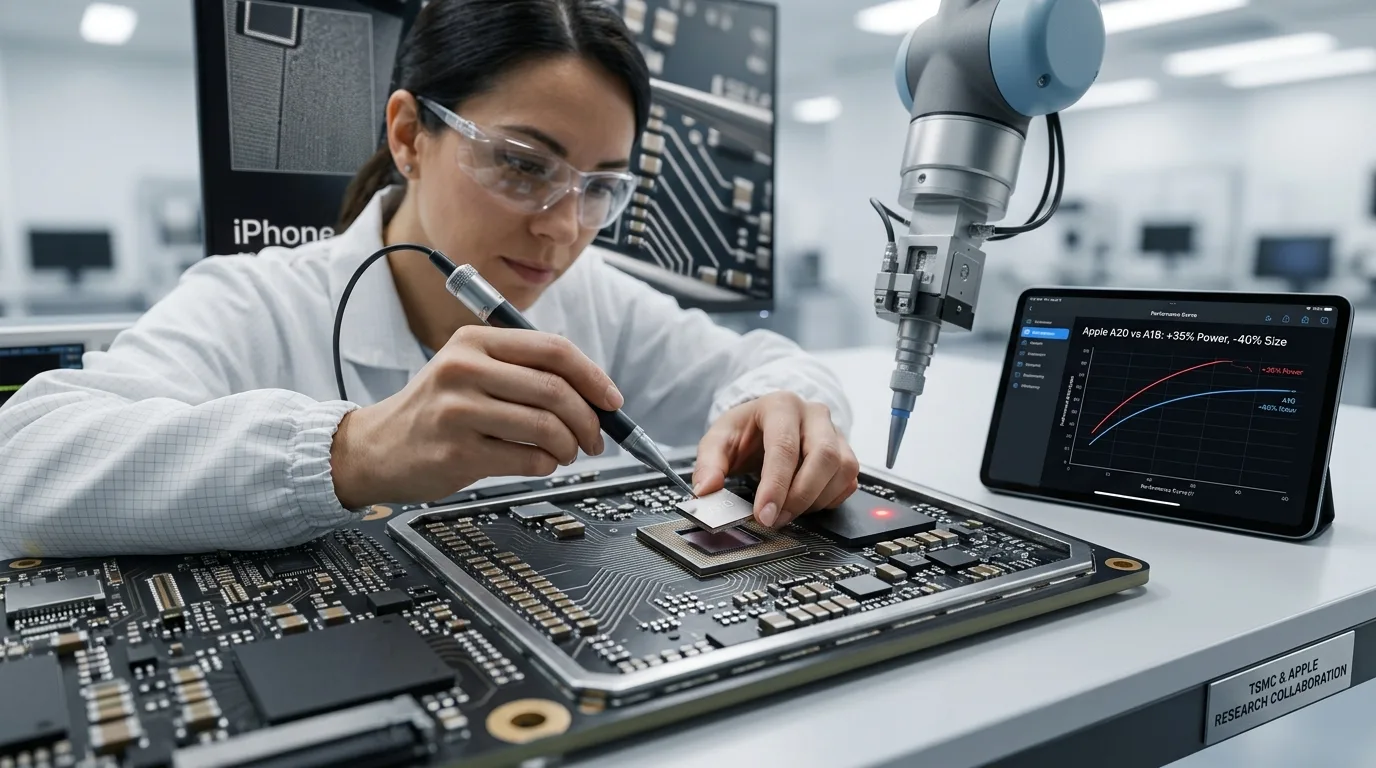
Apple A20: the basic iPhone 18 chip will be even smaller and more powerful
The future Apple A20, intended for the basic iPhone 18, promises smaller dimensions thanks to the TSMC production process. Let's find out what's new.
Apple A20: a step forward in miniaturization
Apple's next chip, called Apple A20, promises to mark a further step forward in the field of miniaturization and energy efficiency. According to rumors, this new processor, intended to equip the basic models ofiphone18, will be even smaller than its predecessor, the A19. This reduction in size is made possible by the adoption of a new and more advanced production process developed by TSMC, Apple's historic partner for the manufacturing of its chips. The goal is to integrate greater power and new features into increasingly smaller spaces, while improving the autonomy of the devices.
Apple A20: expected features
- Production process:New TSMC process (even more advanced than the previous one)
- Dimensions:Lower than the A19
- Intended use:Base iPhone 18 models
- Goals:Greater energy efficiency and improved performance
Comparison with the A20 Pro and implications for the iPhone 18
Available information suggests that there will also be a higher-performance version, the A20 Pro, which will likely find its way into the iPhone 18 Pro models. Although the specific details on the comparison between the A20 and A20 Pro are not yet completely clear, it is reasonable to expect that the Pro version will offer superior performance, perhaps thanks to a greater number of cores or higher clock frequencies. Apple's strategy of differentiating chips between basic and Pro models is now consolidated and aims to offer an optimal user experience for every price range and need. The Apple A20 chip, therefore, will represent the technological basis for the next generation of Apple smartphones, guaranteeing a tangible evolution compared to current models.
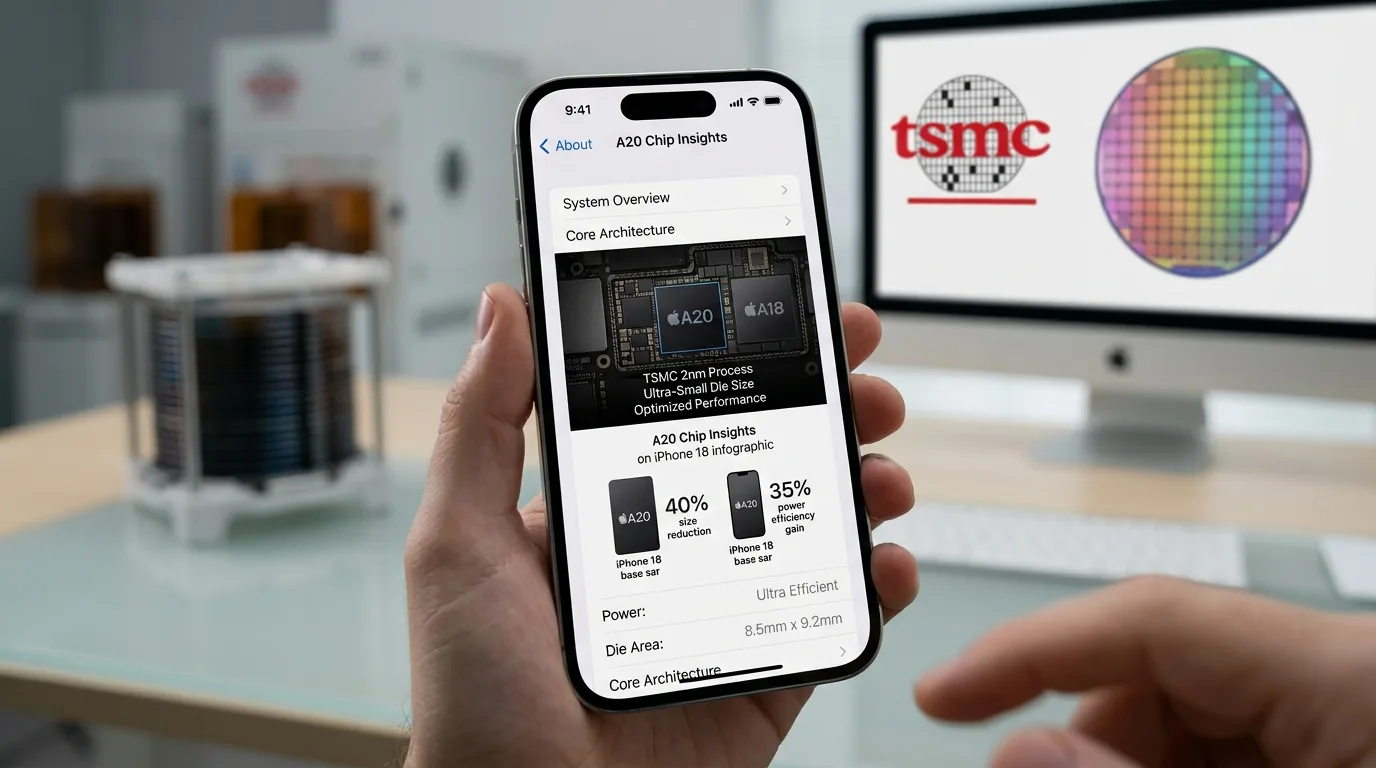
TSMC's role in the future of Apple chips
The close collaboration between Apple and TSMC is fundamental to the success of Apple's chips. TSMC, a world leader in the production of semiconductors, constantly invests in research and development to offer increasingly cutting-edge production processes. The adoption of more advanced manufacturing technologies, such as those that will allow the creation of the Apple A20, allows not only to reduce the physical dimensions of the chips, but also to improve their energy efficiency and performance. This translates into thinner, lighter devices with greater battery life, features that are increasingly requested by users. The future of Apple chips, and consequently iPhones, is closely tied to TSMC's ability to push the limits of semiconductor technology.


Commenti
Ancora nessun commento. Sii il primo a partecipare.