A Home Assistant video intercom with local AI and VoiceBox messages
A DIY Home Assistant video intercom uses ESP32-P4, local facial recognition and VoiceBox to manage visitor messages.
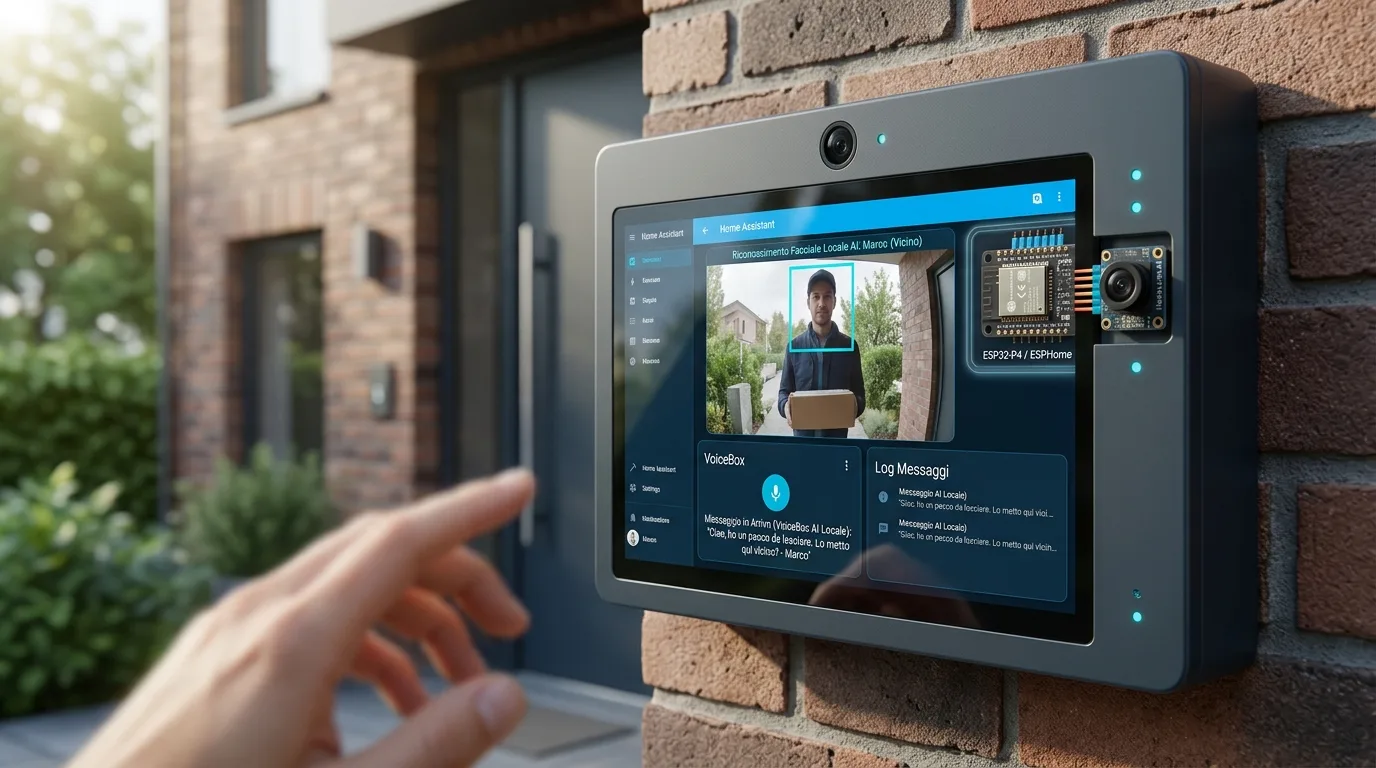
An enthusiast presented in thecommunityOfhomeAssistant is a DIY video intercom based on ESP32-P4, with USB camera, LAN connection and facial recognition performed locally. The project uses ESPHome and also includes a VoiceBox function to play messages recorded with your own voice and collect those of visitors when no one answers. It's an example of home automation oriented towards on-device computing, but the information shared describes a personal prototype, not a commercial product nor a complete construction guide.
A Home Assistant video intercom with local AI
The project described in the Home Assistant community combines an ESP32-P4, a USB camera, a LAN connection and a hardware module for face recognition. The author says he built the system starting from an intercom project connected to ESPHome, with the aim of managing the functions of the video intercom in the home network, without resorting to the cloud for face processing.
The software reference mentioned in the discussion is esphome-intercom, a project that describes a VoIP stack for Home Assistant and ESPHome, with SIP audio and video calls, dashboard phones, ESP32 intercom and call routing through automations. However, the discussion does not contain a complete assembly guide, an electrical diagram or a verifiable list of all the components used: it would not be correct to present it as a ready-to-replicate tutorial.
The distinctive element is the choice to carry out facial recognition directly on the device. HuskyLens is also mentioned in the text in relation to the artificial vision part. The author describes his own result, but does not provide benchmarks, accuracy measures or independent comparative evidence.
VoiceBox: voice messages for those arriving at the door
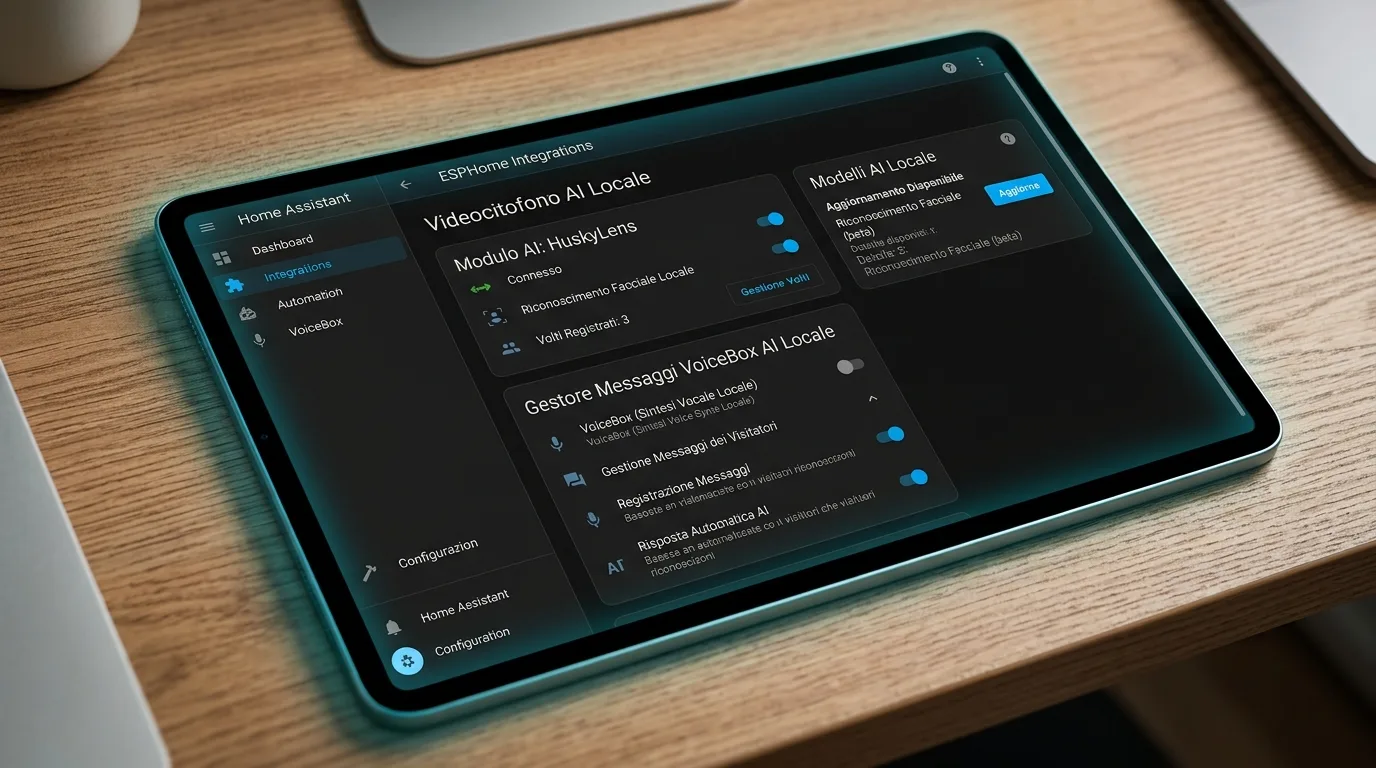
Alongside the video part, the project includes a personalized dashboard in Home Assistant and a function called VoiceBox. The author explains that he can record personal messages with his own voice and collect those left by visitors when no one answers the doorbell.
It is a concrete function that distinguishes the prototype from a simple camera with motion detection: the entrance door also becomes a voice communication point, integrated into the home automation environment. The discussion does not, however, specify the format of messages, how records are maintained, or the behavior of notifications. These aspects would require further technical details before the system can be evaluated in a daily installation.
How does it compare to commercial video intercoms
The post also includes a long comparison with products already on the market, presented by the author as an answer obtained by querying an artificial intelligence system. It is important to read that section for what it is: a comparison reported in the discussion, not a laboratory test nor an independent verification of the characteristics of the competitors.
Devices mentioned include the Aqara Smart Video Doorbell G4 and G410 Select, Eufy Video Doorbell E340 Dual, DoorBird D2101V, 2N IP Solo, 2N IP Verso and Reolink Video Doorbell PoE. The comparison contrasts solutions oriented towards wireless connectivity and local recognition with IP video intercoms with wired connection, underlining that the combination of LAN network and identification of individual people directly on the doorbell would be uncommon.
The same answer also mentions DIY installations that outsource video analysis to a home server, using Frigate NVR and tools like Double Take, DeepStack or CompreFace. The prototype described by the author follows a different approach: according to his story, the recognition part is concentrated in the video intercom hardware, rather than requiring continuous analysis of the flow on a separate server. There are no measures available to compare consumption, costs or reliability of the two architectures.
An interesting prototype, but not yet a replicable guide
Home Assistant video intercom - The value of the creation lies in the integration of multiple elements: video intercom, LAN connection, local facial recognition and management of voice messages through Home Assistant. The choice to keep processing on the device is consistent with an approach to home automation that limits dependence on external services.
For those wishing to build something similar, the shared material constitutes above all a design starting point. The discussion does not document a complete installation procedure, nor does it allow you to verify autonomy, recognition accuracy or behavior in different conditions. Before transforming the prototype into a stable domestic solution, additional information directly from the author and practical tests on the system would be needed.


Commenti
Ancora nessun commento. Sii il primo a partecipare.